Understanding Watch Complications: Beyond Hours and Minutes

At its simplest, a watch tells time. It marks the passing of hours, minutes, and seconds with dependable precision. Yet for centuries, watchmakers have challenged themselves to create timepieces capable of doing far more than measuring the day.
These additional mechanical functions are known as complications. They represent some of the finest achievements in traditional horology, demonstrating how remarkable engineering can exist within an object small enough to rest comfortably on the wrist.
Whether displaying the current date, tracking a second time zone, measuring elapsed time, or following the phases of the moon, complications transform a watch from a practical instrument into an extraordinary work of mechanical ingenuity.
For collectors, understanding complications opens the door to a deeper appreciation of the creativity and technical mastery behind luxury watchmaking.
More Than Simply Telling Time
The word complication refers to any function beyond the standard display of hours, minutes, and seconds.
Some complications are designed for everyday convenience. Others exist to demonstrate exceptional engineering or preserve centuries-old traditions.
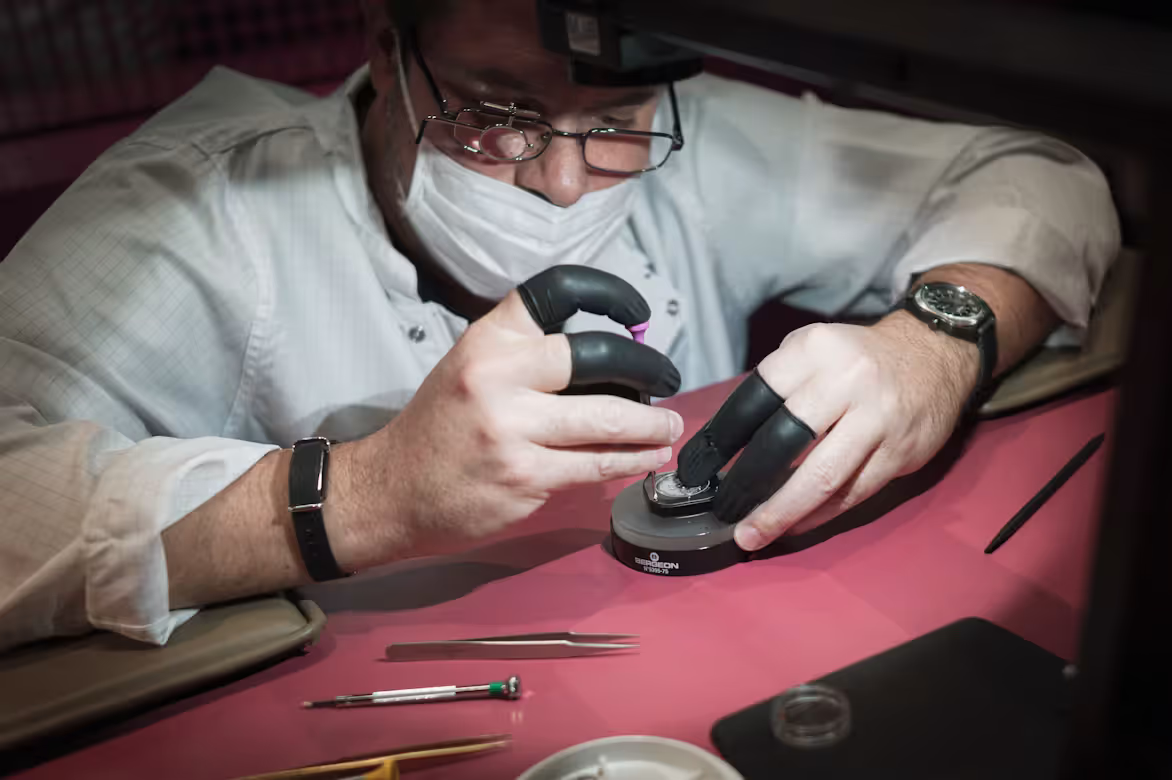
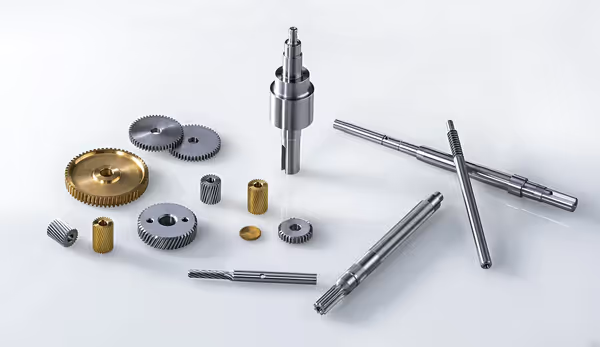
Creating even a seemingly simple complication requires careful planning and extraordinary precision. Every additional indication demands new gears, springs, levers, and cams that must integrate seamlessly with the existing movement without sacrificing reliability.
The result is a miniature mechanical system where dozens of additional components operate together inside a space measured in millimeters.
This extraordinary balance between complexity and precision is one reason complicated watches remain so highly respected among collectors.
Everyday Complications
Many of the world's most appreciated complications are those that improve everyday usability without overwhelming the wearer.
Date Display
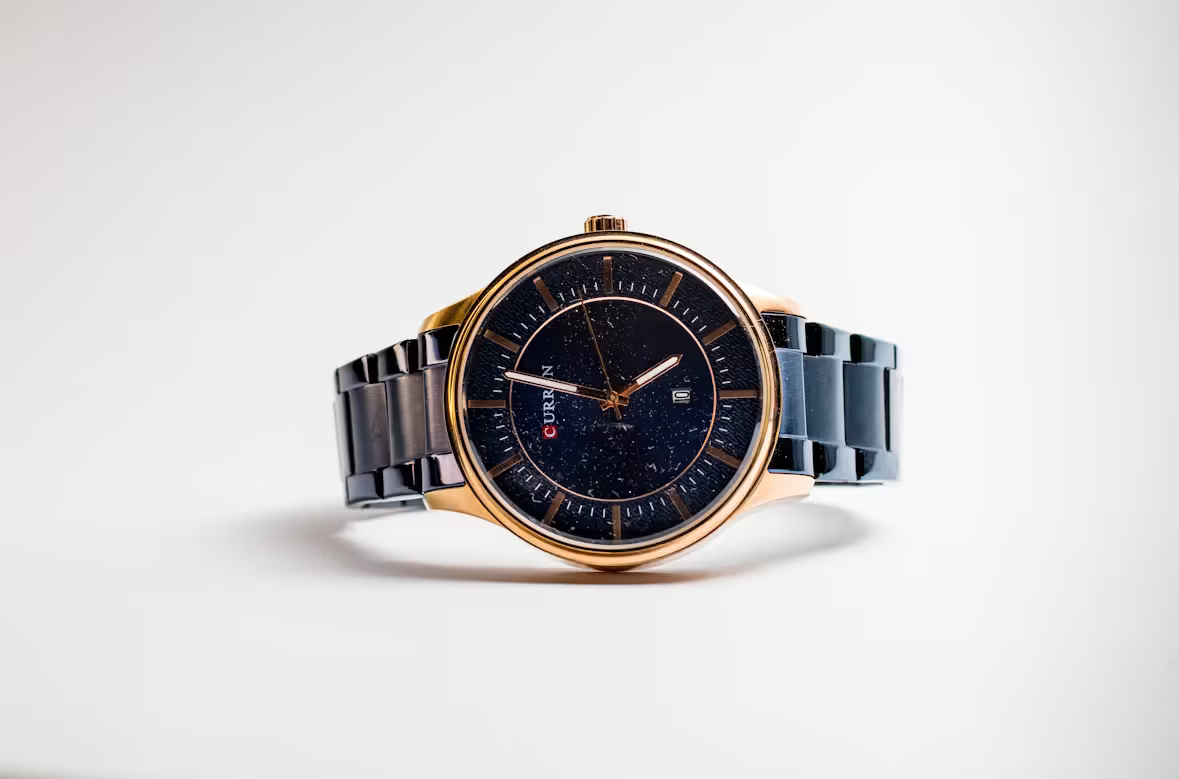
One of the most common complications, the date display advances automatically every twenty-four hours, eliminating the need for daily adjustment.
GMT
Originally developed for travelers and aviation professionals, GMT watches display two or more time zones simultaneously, making them invaluable for international travel.
Power Reserve Indicator
A power reserve indicator shows how much energy remains stored within the mainspring, allowing the wearer to know when the watch requires winding.
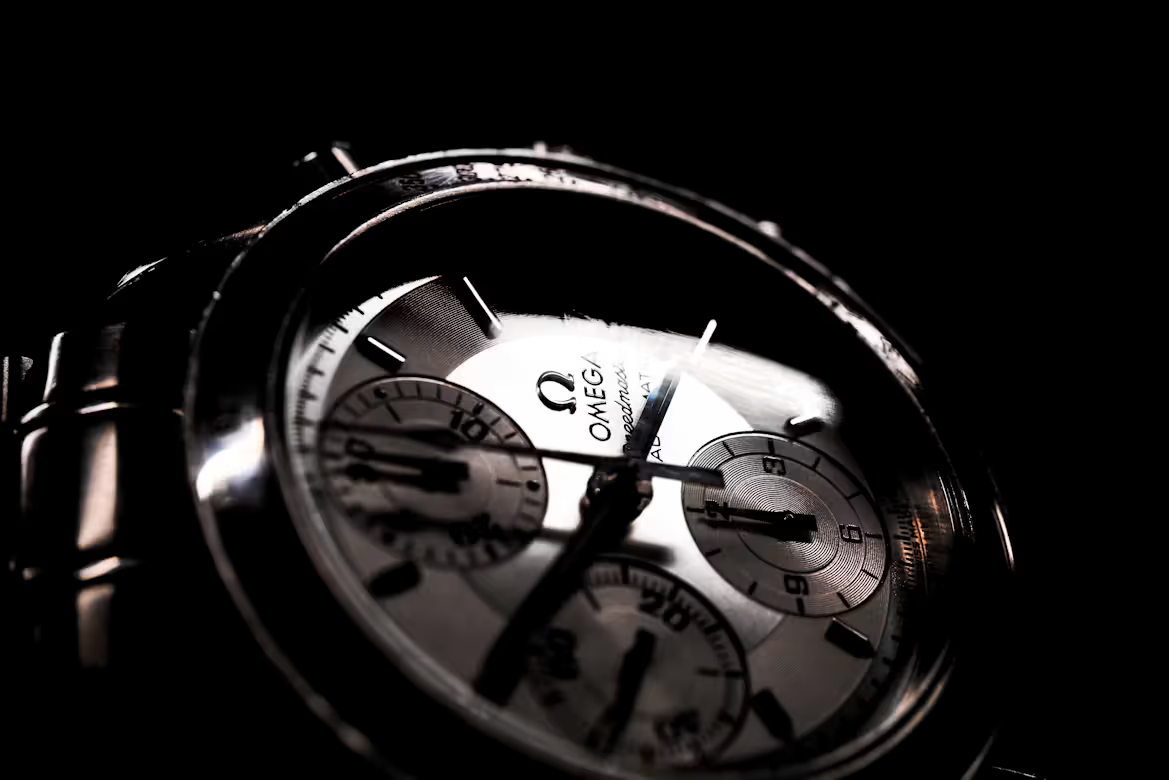
Small Seconds
Rather than positioning the seconds hand in the center of the dial, some watches display it on a dedicated subdial, creating a distinctive aesthetic while preserving traditional movement architecture.
These practical complications demonstrate how thoughtful engineering can improve the everyday ownership experience.

Engineering at an Extraordinary Scale
Designing a complication is far more challenging than simply adding another display.
Every additional function requires precise interaction between existing components while maintaining the watch's overall accuracy. Space inside a movement is extremely limited, forcing engineers to create increasingly sophisticated mechanisms without significantly increasing thickness.
Some highly complicated movements contain more than five hundred individual parts, each manufactured to microscopic tolerances.
Assembly requires immense patience. Watchmakers often spend many hours regulating a complicated movement, ensuring every function operates smoothly and reliably.
This remarkable engineering explains why complicated mechanical watches are considered milestones of horological achievement.
Celebrating Traditional Watchmaking
Beyond their technical capabilities, complications celebrate the creativity of traditional watchmaking.
Many complications were originally developed centuries ago, long before modern manufacturing techniques existed. Watchmakers relied on mathematical calculations, patient experimentation, and exceptional manual skill to design mechanisms capable of performing remarkably complex tasks.
Today's luxury manufacturers continue to preserve these traditions while incorporating advanced materials and modern engineering techniques.
This combination of heritage and innovation allows complications to remain relevant despite dramatic advances in digital technology.
For collectors, each complication represents another chapter in the continuing evolution of horology.
"A watch complication is more than an additional function—it is a testament to the imagination, patience, and precision of generations of master watchmakers."
Why Collectors Appreciate Complications
Complicated watches invite owners to interact more deeply with their timepieces.
Understanding how a chronograph measures elapsed time, observing a moonphase display gradually change, or tracking multiple time zones through a GMT complication creates an experience that extends beyond simply reading the time.
Collectors value these watches because every complication reflects thoughtful engineering rather than electronic automation.
The appreciation comes not only from what the watch can do, but from how it achieves those functions entirely through mechanical means.
As knowledge grows, collectors often begin recognizing the remarkable ingenuity hidden beneath every dial, making each complication another reason to admire traditional watchmaking.
Final Thoughts
Watch complications remind us that luxury watchmaking has always been driven by curiosity and innovation. From practical date displays to intricate moonphase indicators, every additional function represents countless hours of engineering and craftsmanship distilled into an elegant mechanical system.
For enthusiasts, complications offer far more than convenience. They reveal the extraordinary creativity that defines horology and demonstrate how centuries of accumulated knowledge continue to inspire modern watchmaking.
The next time you glance at a beautifully crafted mechanical watch, look beyond the hands and dial. You may discover an intricate world of engineering where every complication tells a story of human ingenuity, precision, and timeless craftsmanship.

Alexander Cross
Luxury Watches & Horology Editor specializing in Swiss watchmaking, mechanical movements, and exceptional craftsmanship. Alexander covers iconic timepieces, independent watchmakers, collecting culture, and the traditions that define modern horology.


Comments