Inside Mechanical Watch Movements: The Engineering Behind Every Tick
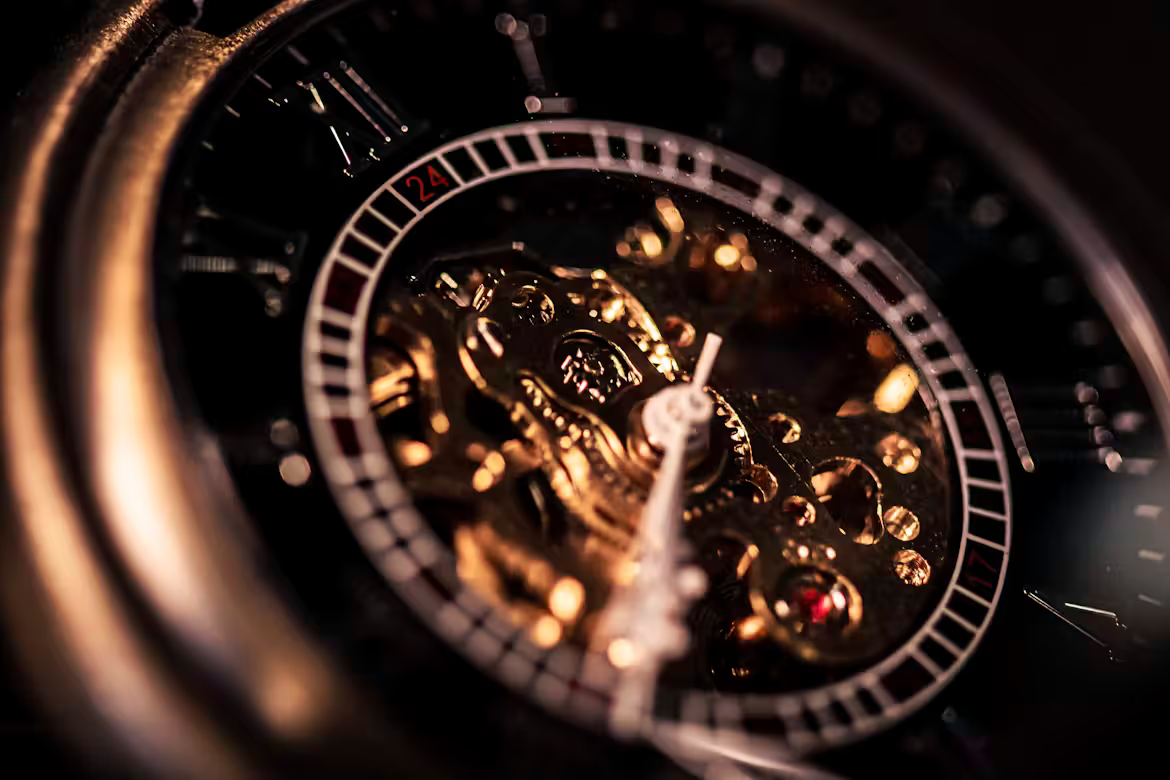
Luxury watches are often admired for their elegant dials, beautifully finished cases, and timeless aesthetics. Yet beneath every carefully polished exterior lies an extraordinary mechanical world that remains largely invisible to the wearer. Hidden behind the dial or displayed through a sapphire crystal case back, the movement is where centuries of innovation, engineering, and craftsmanship come together.
Unlike electronic devices that rely on batteries and microchips, a mechanical watch operates entirely through physical interaction. Springs store energy, gears transmit power, and tiny oscillating components regulate time with astonishing precision. Every second displayed on the dial is the result of hundreds of miniature parts working together in perfect harmony.
For many enthusiasts, discovering the movement behind a watch is the moment when appreciation transforms into fascination. Understanding how these intricate mechanisms function reveals why mechanical watches continue to occupy a special place in the world of luxury craftsmanship.
A Living Machine Built by Human Hands
Mechanical movements are remarkable because they transform stored energy into controlled, continuous motion without the assistance of electricity. Every component is carefully engineered to interact with countless others, creating a system that can measure time with impressive consistency for decades.
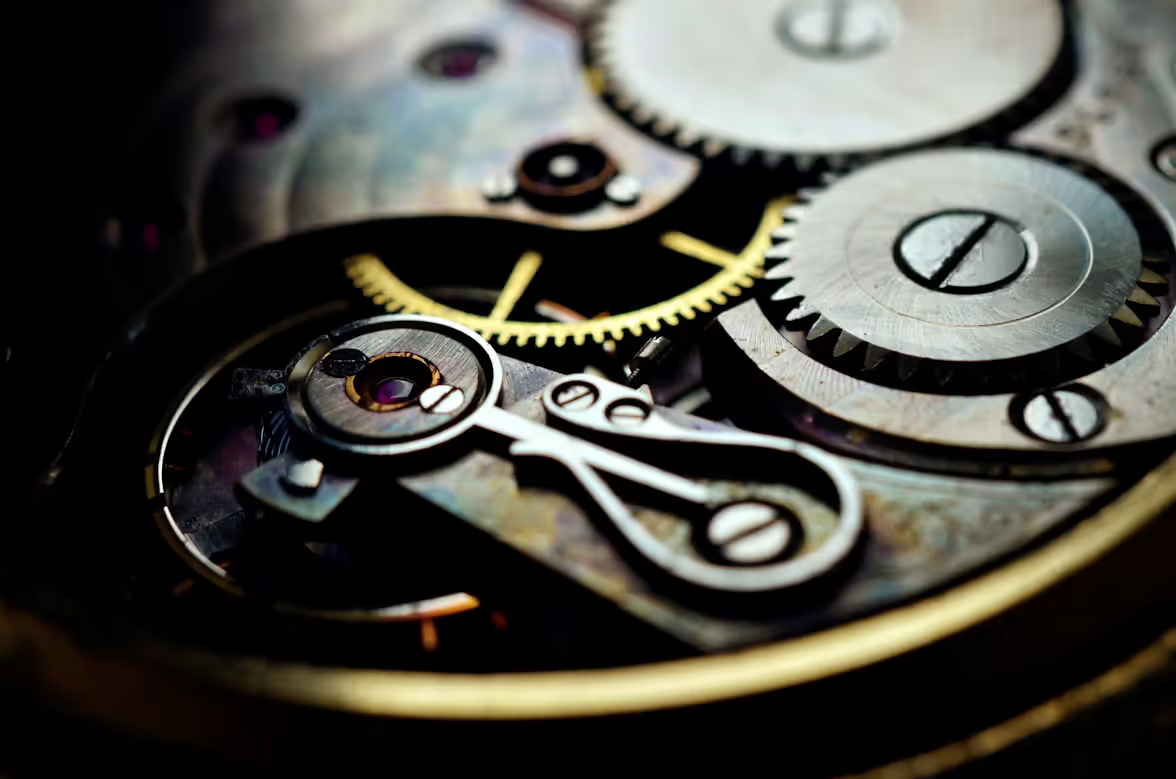
The process begins with the mainspring, a tightly wound strip of specialized metal that stores energy. As it slowly unwinds, that energy travels through a carefully designed gear train before reaching the escapement and balance wheel—the components responsible for regulating time.
Each movement contains dozens, and often hundreds, of individual parts manufactured to microscopic tolerances. Even the smallest variation can influence performance, requiring watchmakers to assemble and regulate every movement with exceptional patience and precision.
This extraordinary level of craftsmanship explains why luxury mechanical watches continue to be admired not only as functional instruments but also as enduring examples of engineering excellence.
The Four Foundations of Every Mechanical Movement
Although modern movements vary in complexity, most rely on four essential systems working together.
The Mainspring
The mainspring acts as the watch's energy source. Whether wound manually or automatically through the movement of the wrist, it stores power that is gradually released throughout the day.
Modern mainsprings are engineered to deliver consistent energy over extended periods, helping maintain stable performance throughout the watch's power reserve.
The Gear Train
Once released from the mainspring, energy travels through a sequence of carefully calculated gears.
These gears reduce rotational speed while transferring power toward the hands displayed on the dial. Their proportions are mathematically designed to ensure that seconds, minutes, and hours advance with remarkable precision.
The Escapement
Often considered the movement's control center, the escapement regulates how quickly stored energy is released.
Instead of allowing the mainspring to unwind immediately, it distributes power in tiny, consistent intervals. This rhythmic action creates the familiar ticking sound associated with mechanical watches.
The Balance Wheel
Working alongside the escapement, the balance wheel oscillates back and forth at a constant frequency.
Its steady rhythm serves as the heartbeat of the movement, allowing the watch to measure time with impressive consistency.
Together, these four systems create one of the finest examples of miniature mechanical engineering ever developed.
Precision Measured in Microns
One of the most remarkable achievements in watchmaking is the extraordinary precision required during manufacturing.
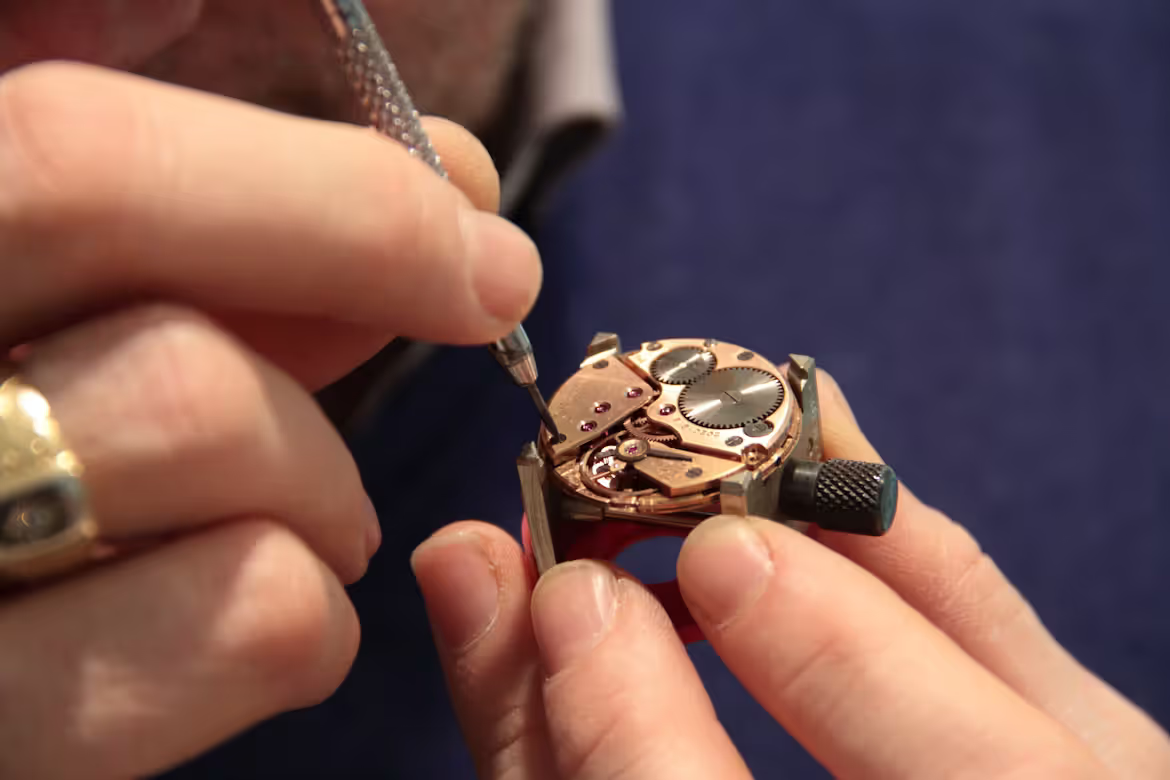
Many movement components measure only a few millimeters across, while some pivots and jewels are smaller than a grain of rice. Despite their tiny dimensions, every part must interact flawlessly with neighboring components.
Modern manufacturing technology produces incredible accuracy, yet many finishing and adjustment processes still rely on the experience of highly trained artisans.
Watchmakers spend countless hours regulating movements, ensuring that every wheel rotates smoothly and every oscillation occurs exactly as intended.
This balance between advanced engineering and traditional craftsmanship defines the character of luxury mechanical watchmaking.

Craftsmanship Beyond Function
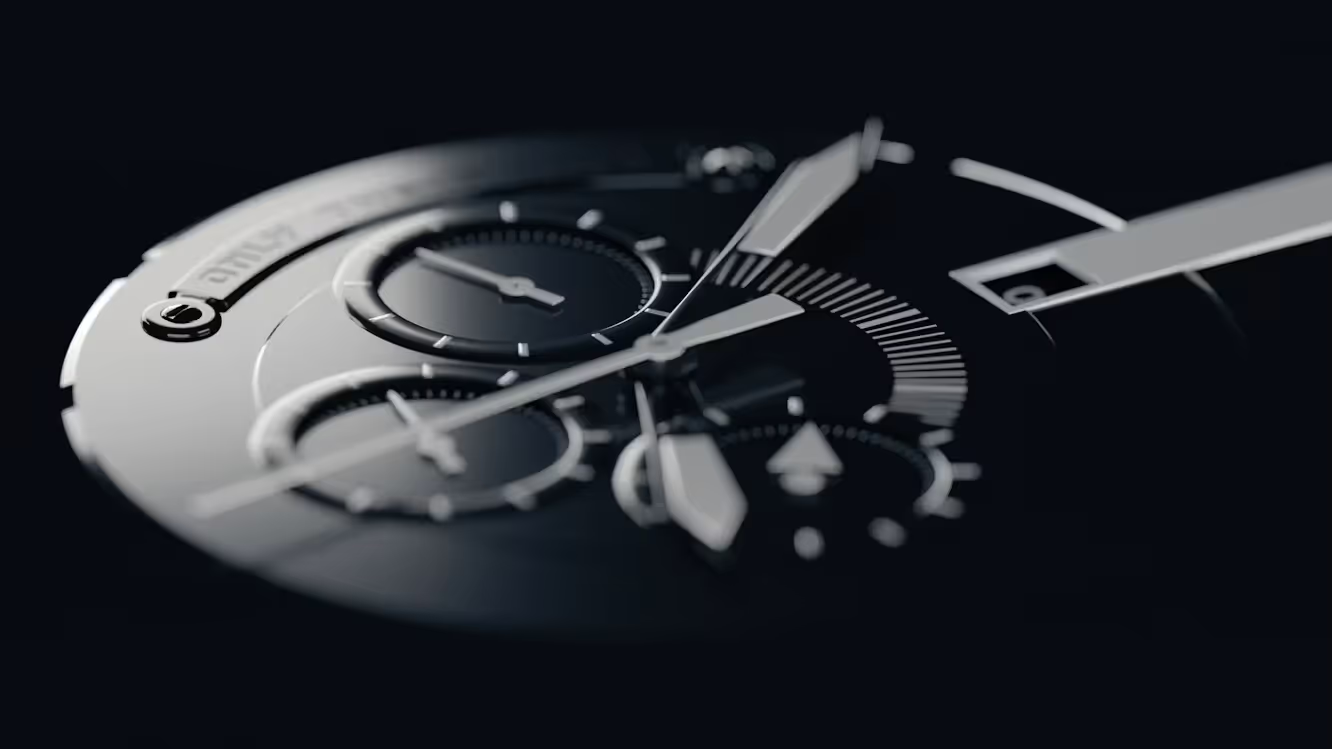
A luxury mechanical movement is designed to perform with precision, but its appeal extends far beyond accuracy alone. Many of its finest details serve little practical purpose—they exist to celebrate the artistry of traditional watchmaking.
Bridges are often decorated with Geneva stripes that catch the light as the movement turns. Base plates may feature circular graining, while polished screw heads and beveled edges reflect hours of meticulous hand-finishing. Even components hidden beneath the dial frequently receive the same level of attention, despite never being seen during everyday wear.
These decorative techniques require patience, consistency, and years of experience to master. Rather than being applied by machines alone, many finishing processes continue to rely on the skilled hands of experienced artisans.
For collectors, these details represent a philosophy of craftsmanship where excellence is measured not only by what is visible, but also by the care invested in every unseen component.

Why Mechanical Movements Continue to Inspire Collectors
Collectors often describe a mechanical movement as the soul of a watch. While the dial is the face presented to the world, the movement reveals the true character of the timepiece.
Unlike mass-produced electronics, every mechanical movement reflects countless hours of engineering, assembly, regulation, and finishing. It demonstrates how traditional craftsmanship continues to thrive in an age dominated by automation.
Owning a mechanical watch also creates a different relationship with time. Winding the watch, observing the smooth sweep of the seconds hand, and appreciating the movement through a transparent case back become small rituals that connect the wearer to centuries of horological tradition.
This emotional experience cannot be measured in specifications alone. It is built through appreciation, curiosity, and the understanding that every movement represents generations of accumulated knowledge.
Many collectors eventually discover that their fascination isn't driven by acquiring more watches, but by learning more about the remarkable engineering behind each one.
"The finest mechanical movements are designed not only to measure time, but to preserve centuries of craftsmanship in motion."
Innovation Rooted in Tradition
Modern mechanical watches continue to evolve through new materials, advanced manufacturing techniques, and improved precision. Silicon components reduce friction, enhanced alloys improve durability, and computer-aided engineering allows movements to achieve remarkable efficiency.
Yet despite these technological advances, the fundamental principles of mechanical watchmaking remain largely unchanged.
A mainspring still stores energy.
A gear train still transfers power.
An escapement still regulates its release.
A balance wheel still beats with rhythmic precision.
This continuity is one of the defining qualities of luxury horology. Every contemporary movement represents both innovation and respect for traditions that have been refined over generations.
Rather than replacing craftsmanship with technology, modern watchmaking uses innovation to support and preserve it.
Final Thoughts
Mechanical watch movements remind us that exceptional craftsmanship is often found where few people think to look.
Beneath every carefully designed dial lies a miniature world of gears, springs, levers, and wheels working together with astonishing precision. Every oscillation of the balance wheel reflects centuries of engineering knowledge, while every polished bridge and hand-finished edge celebrates the dedication of skilled artisans.
For collectors, enthusiasts, and anyone who appreciates thoughtful design, understanding the movement transforms a watch from a beautiful accessory into something far more meaningful. It becomes a lasting expression of creativity, precision, and human ingenuity.
In an increasingly digital world, the enduring appeal of mechanical watchmaking lies in its ability to demonstrate that true craftsmanship never goes out of style. Every movement tells a story—not only of time, but of the people, traditions, and expertise that continue to shape the finest timepieces in the world.

Alexander Cross
Luxury Watches & Horology Editor specializing in Swiss watchmaking, mechanical movements, and exceptional craftsmanship. Alexander covers iconic timepieces, independent watchmakers, collecting culture, and the traditions that define modern horology.





Comments