The Art of Gem Cutting: Precision Behind Every Brilliant Stone
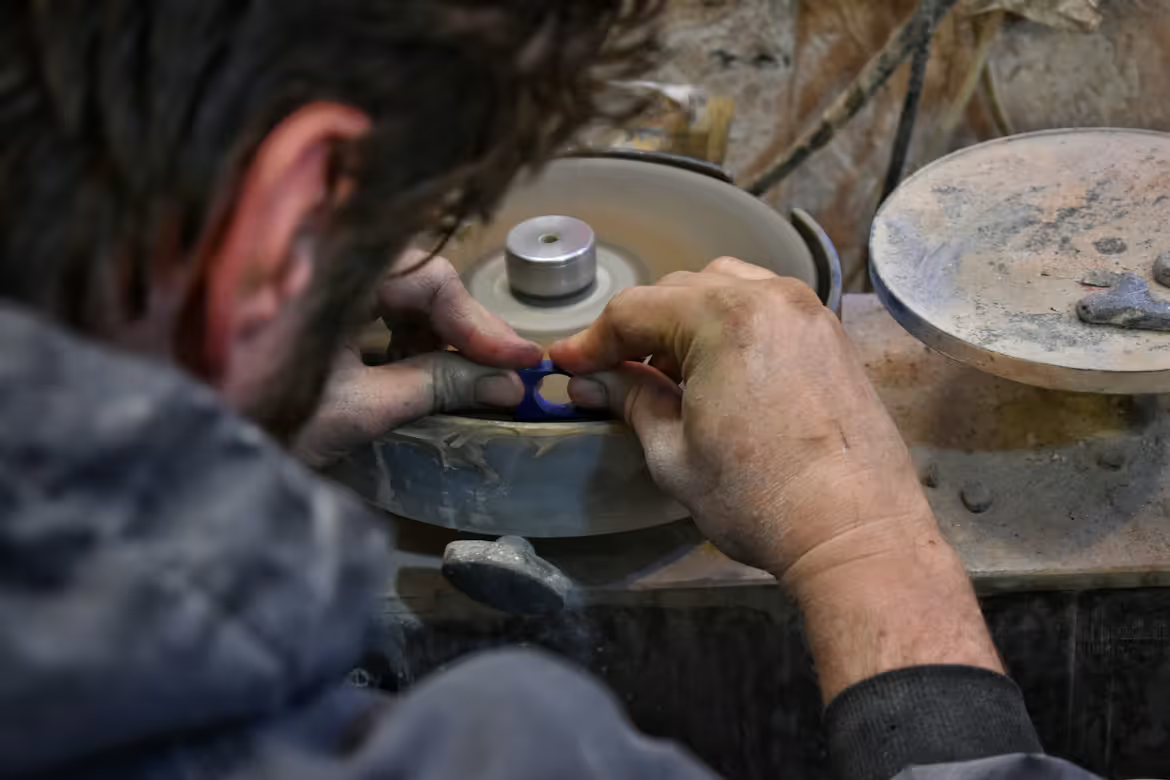
The brilliance of a gemstone is often admired long before anyone considers the remarkable craftsmanship hidden behind its appearance. Sparkle, colour, and symmetry may seem effortless, yet they are the result of countless careful decisions made by highly skilled gem cutters.
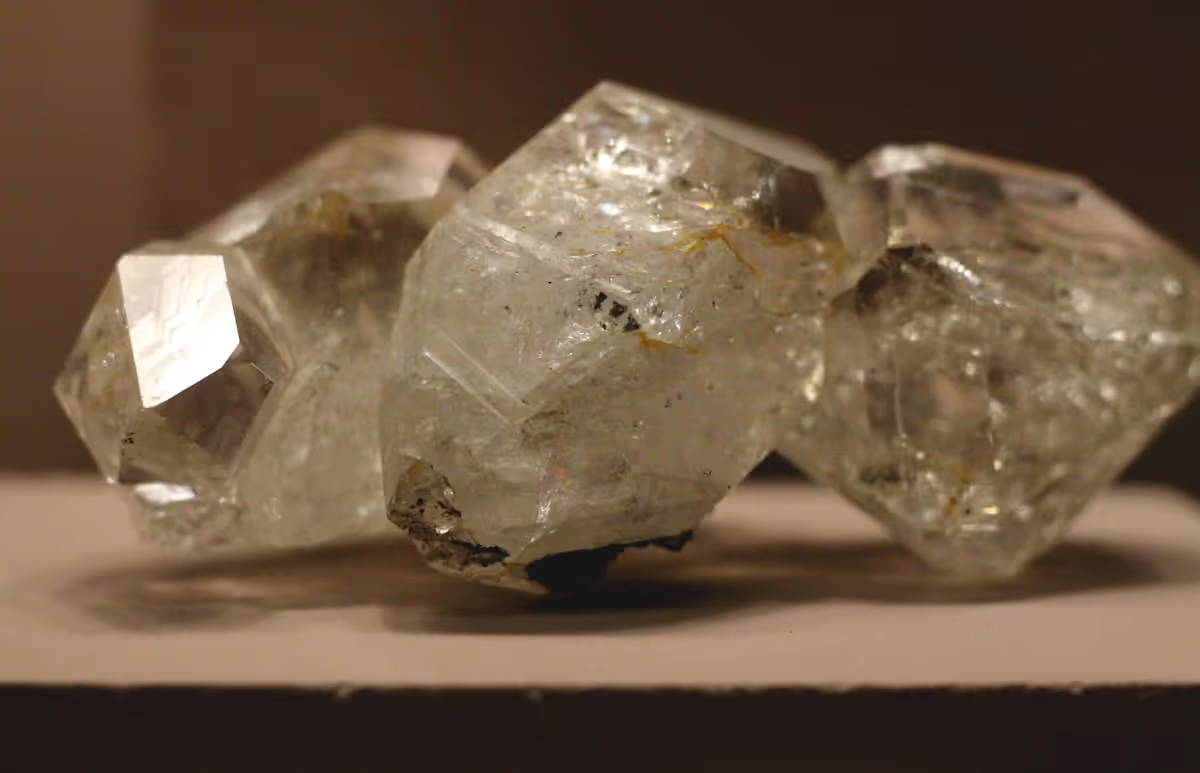
Every gemstone begins as a rough crystal formed naturally beneath the earth over millions of years. At this stage, its true beauty is often concealed beneath uneven surfaces and irregular shapes. Revealing that beauty requires technical knowledge, artistic judgement, and extraordinary patience.
Unlike automated manufacturing, gem cutting remains one of the few luxury crafts where experience continues to play an irreplaceable role.
Each stone presents a unique challenge.
Its internal structure, natural inclusions, colour distribution, and crystal orientation all influence how it should be cut. There is no universal formula that guarantees perfection.
Instead, master cutters study every gemstone individually before making the first and most important decision—where to begin.
Understanding the Rough Stone
Before any cutting takes place, the gemstone is carefully examined from every angle.
Specialists evaluate transparency, colour zoning, natural fractures, and internal inclusions. Their objective is to understand how light will travel through the crystal once it has been shaped.
This stage may take hours.
A single incorrect decision at the beginning can permanently reduce both beauty and material yield. For this reason, experienced cutters rely not only on technical instruments but also on years of practical observation.
Planning is just as important as cutting itself.
The finest gemstones owe their brilliance to careful preparation long before the first facet is created.
Finding the Perfect Balance
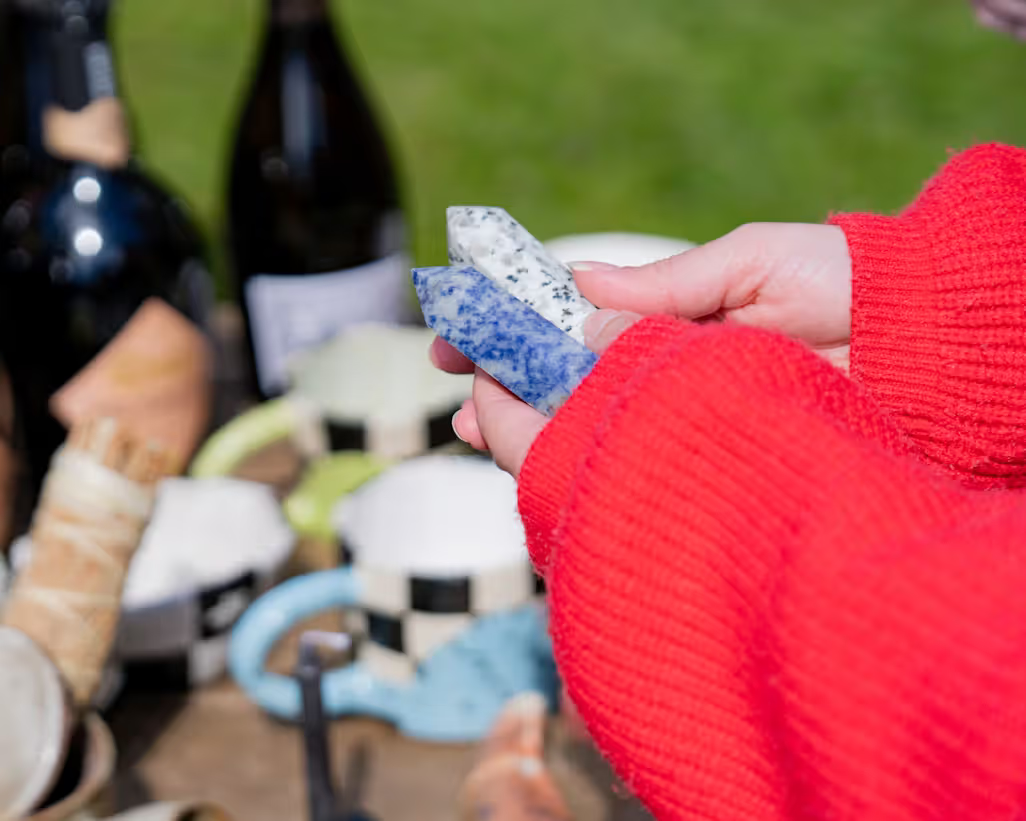
Gem cutting is an exercise in compromise.
Removing more material can improve brilliance but reduce the stone's size. Preserving weight may increase value in one sense while limiting optical performance in another.
Master cutters constantly balance these competing priorities.
Their goal is not simply to produce the largest gemstone possible but to reveal its greatest natural beauty. Every angle, every proportion, and every facet contributes to how light enters, reflects, and exits the finished stone.
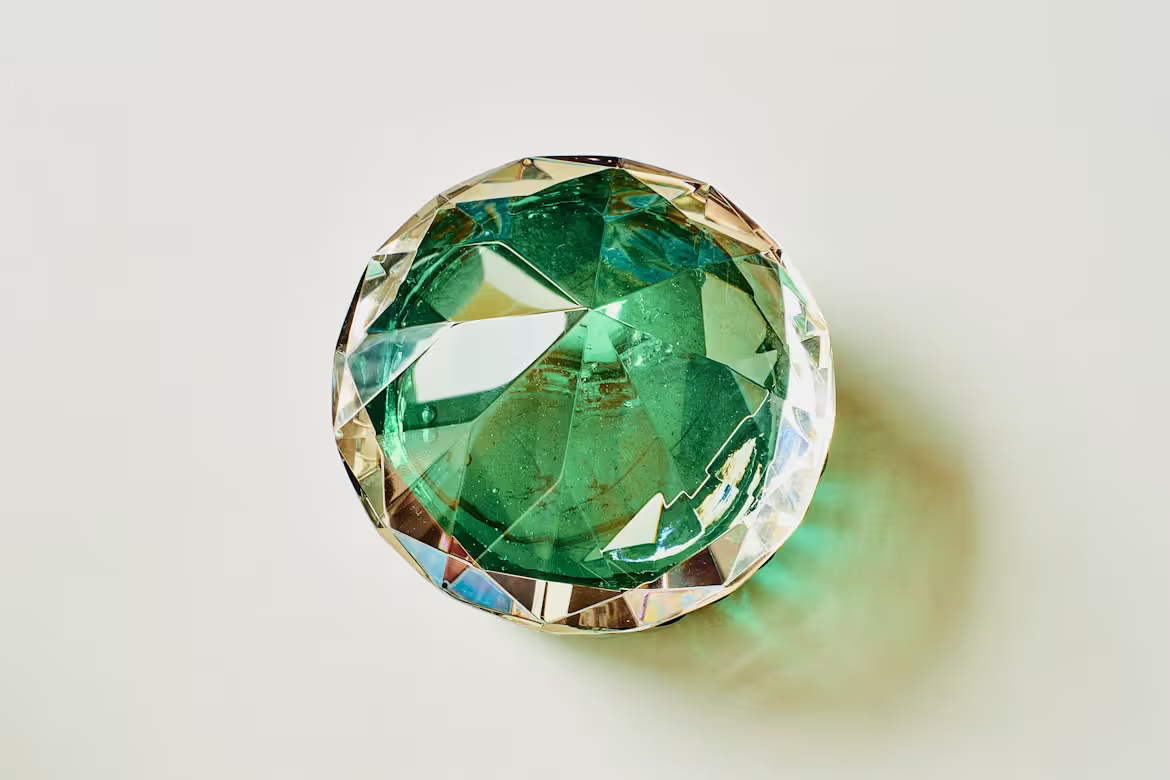
When these proportions are precisely calculated, the gemstone comes alive with remarkable brilliance and depth.
This transformation is what separates exceptional craftsmanship from ordinary workmanship.
Every Facet Has a Purpose
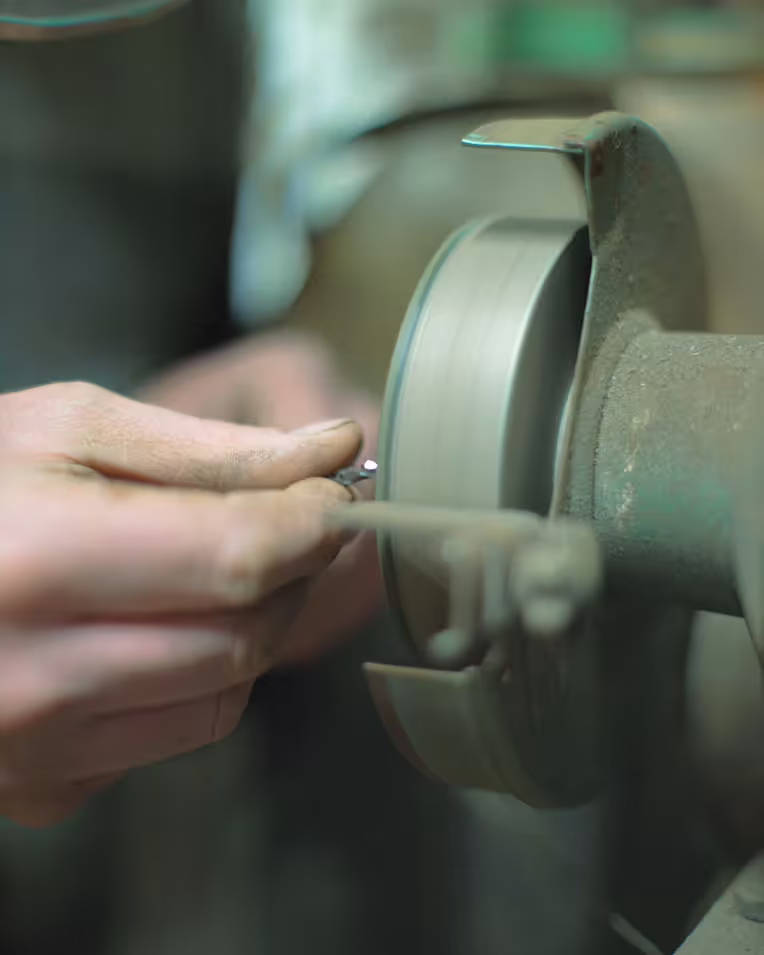
To an observer, the facets of a polished gemstone may appear purely decorative.
In reality, every surface has a precise optical function.
Each facet is positioned to guide light through the stone, maximizing brilliance while maintaining balance and symmetry. Even slight variations in angle can influence how the finished gemstone performs under natural light.
This extraordinary precision explains why the world's finest gemstones often require many hours—or even days—to complete.
Patience is not simply part of the process.
It is the foundation of exceptional gem cutting.
Traditional Techniques Passed Through Generations
Although modern technology has introduced advanced measuring instruments and precision equipment, many of the world's finest gemstones are still shaped using techniques refined over centuries.
Master gem cutters develop an intuitive understanding of how different minerals respond during the cutting process. Every crystal possesses unique characteristics, requiring adjustments that cannot be determined by machinery alone.
This combination of scientific knowledge and practical experience distinguishes true craftsmanship.
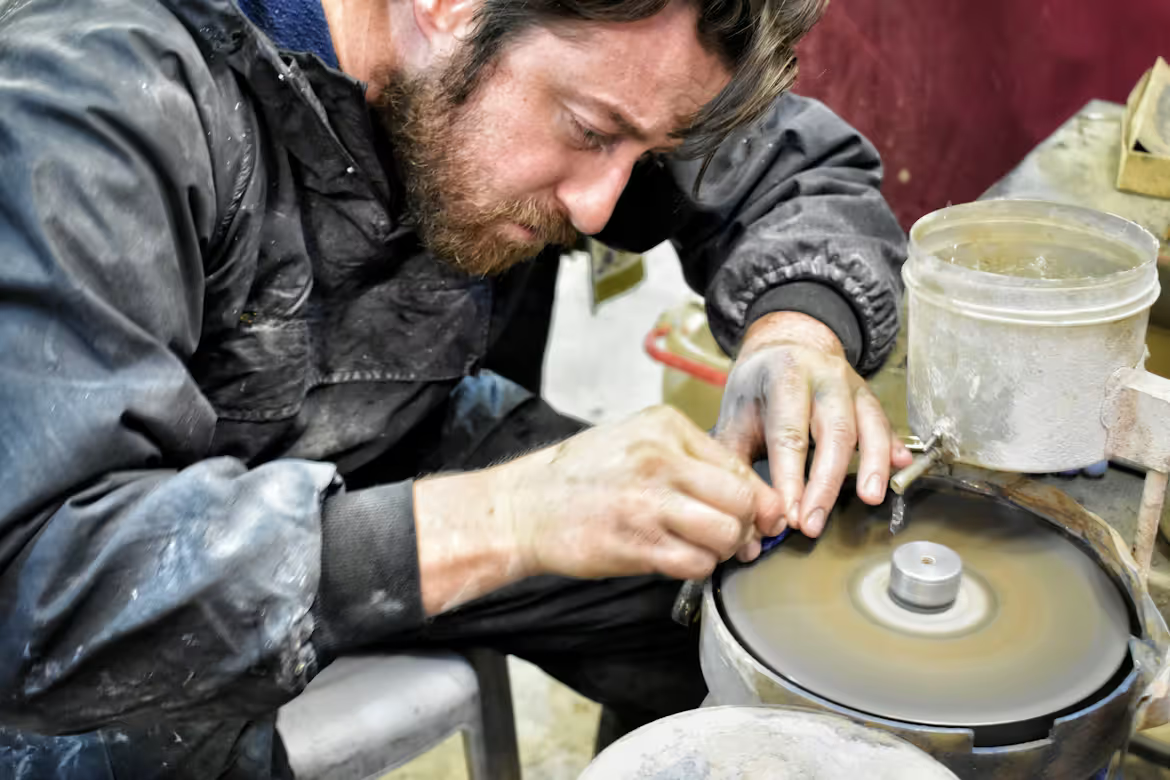
Rather than following a fixed formula, artisans evaluate each stone individually, adapting their approach according to its natural structure. Some gemstones demand extraordinary patience due to their hardness, while others require delicate handling to preserve their clarity.
These traditional skills continue to define the highest standards of fine jewelry.
Symmetry, Polish, and Light Performance
Once the principal facets have been completed, the gemstone enters its final stage of refinement.
Every surface is carefully polished to eliminate microscopic imperfections that might interfere with the movement of light. At this stage, even the smallest inconsistency can influence brilliance, fire, and overall visual balance.
Symmetry is equally important.
Each opposing facet must align with remarkable precision so that light reflects consistently throughout the stone. This balance creates the lively sparkle collectors immediately recognize in exceptionally cut gemstones.
The polishing process often requires almost as much attention as the initial cutting itself.
Only after every surface has been refined does the gemstone reveal its full beauty.
Modern Innovation Supporting Traditional Craftsmanship
Today's gem cutters benefit from sophisticated imaging technology and highly accurate measuring equipment that assist with planning and precision.
These innovations improve consistency while helping artisans understand the internal structure of each crystal before cutting begins.
Technology, however, does not replace craftsmanship.
The most important decisions still depend upon human judgement.
Experienced cutters determine where to preserve weight, where to maximise brilliance, and how to reveal the unique personality hidden within every gemstone. Their expertise allows modern innovation to complement centuries-old techniques rather than replace them.
This partnership between technology and artistry continues to shape the future of fine jewelry.
"A gemstone's brilliance is discovered, not created. Master craftsmanship simply reveals the beauty that nature has hidden within."
Final Thoughts
The journey from rough crystal to polished gemstone is one of the most demanding and rewarding processes in fine jewelry. Every stage requires technical expertise, patience, and artistic judgement to reveal the natural beauty concealed within the stone.
Master gem cutters understand that every decision influences the final result. Through careful planning, precise faceting, and meticulous polishing, they transform raw minerals into extraordinary gemstones capable of captivating collectors for generations.
While modern technology continues to improve precision, the essence of gem cutting remains deeply human. Experience, observation, and craftsmanship guide every choice, ensuring that each finished gemstone possesses its own distinctive character.
For collectors, appreciating a beautifully cut gemstone means appreciating not only the wonder of nature but also the remarkable skill required to unlock its full brilliance.

Charlotte Beaumont
Fine Jewelry Editor covering exceptional jewelry, rare gemstones, and timeless craftsmanship. Charlotte explores heritage jewelry houses, precious materials, and the artistry behind pieces created to be treasured for generations.



Comments